
Editorial Team
8 min read
We compare Clover Hospitality by BentoBox, OpenTable, Resy, SevenRooms, Tock, and Yelp.
Long gone are the days of a restaurant using a reservations book and landline to fill their dining room. And with technological advances in restaurant reservation platforms, comes advantages for restaurants too.
Restaurants can use reservation software to help them fill their dining rooms, learn more about their guests and why they decided to come in, and receive feedback on their dining experience.
Below, you’ll see our comparison of some of the major players in the reservation software space. Whichever reservations system you end up using, Clover Hospitality Reservations will seamlessly integrate with your website and works alongside the Clover Hospitality POS.
So go ahead, take a closer look at the most popular options and decide which one is the best restaurant reservation software for you.
“In our restaurant, we really try to control the atmosphere – it’s a thematic experience. We don’t want large parties, or a bunch of people reserving tables and not showing. We want to be able to control our reservations book through time slots, rather than covers. We’re able to do that with Clover Hospitality.” – Len Johnson, owner of Better Than Dessert Restaurant
Pros:
- Built-in Features: Table management and waitlist management features are built in, so you can control capacity and hold table inventory for walk-in guests through the same platform that you take reservations.
- Guest Communication: Two-way SMS communication with guests allows you to minimize no shows.
- Revenue: No cover fees. Your restaurant keeps all revenue on every reservation.
- Google Integration: Reserve with Google integration enables you to capture more bookings through the powerful search engine. The platform also enables guests to make reservations from wherever they’re finding restaurants online – social media, email marketing, and their restaurant website. Merchants can utilize this feature with or without Clover Hospitality’s POS.
- Guest Data: You own your guest data and relationships, which means you can market to customers directly through communications that reflect your restaurant’s branding.
- [Unique to Clover Hospitality!] Manage Table Capacity: Unlike marketplaces, Clover Hospitality Reservations, allows hosts and operators to more granularly manage table capacity. Create daily capacity control templates to manage table inventory. Hosts also have the flexibility to update table capacity and set limits to control and manage inbound reservations. This is a unique to market feature that you can only get with Clover Hospitality
- New to Market Features: Lastly, Clover Hospitality POS with Reservations gain access to Checkless Payments, which allow diners to pay with a card on file instead of flagging down a server or waiting for a bill. Guests simply walk out when they’re done, while you build long-term relationships with diner data.
Cons:
- Not a Marketplace: Additionally, as a direct booking channel, there’s no guest network to tap into like there is on reservations marketplaces. However, with this model, you’re not paying a fee on every guest that books and you’re not competing with other restaurants for visibility on a third-party platform.
Costs:
- Customers that buy Reservations without the Clover Hospitality POS pay $119/mo. POS customers receive a discount of $99/mo when bought as part of our Core plans. On-time set-up fee is $200
- POS customers of our All-in plan get benefit from hardware, software (including Reservations), e-commerce, and 24/7 support into one simple monthly payment—with no upfront costs.
How Clover Hospitality is Different:
If you have a loyal customer base that already books directly on your website, this is a great solution for you.
Operators that also want to make a strong first impression gain access to a branded pre-dining experience which builds anticipation for the dining experience by sharing menu suggestions and other restaurant content before diners arrive.
It’s also a good option for restaurants who want their online ordering, pre-order and catering, website, events management, and reservations software under one roof for a more streamlined experience and unified guest database.
Pros:
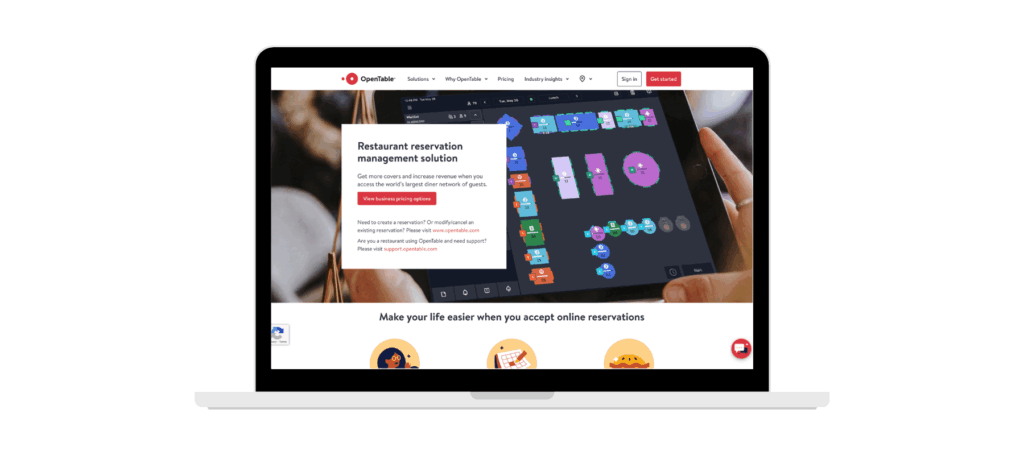
- Marketing Engine: Major marketing engine that seats more than 1.8 billion diners annually. Users are incentivized to go to OpenTable.com to search for a reservation.
- In-App Recommendations: Helps fill empty tables and generate steady business flow by recommending open tables to customers on the app.
- Easy UI: Option for their simple-to-use Electronic Reservation Book, which handles reservation management, table management, guest recognition, and email marketing.
- Gamification: Dining points system to incentivize guests.
Cons:
- Open Table Brand First: The dining points system builds loyalty for the OpenTable app rather than for your restaurant.
- Open Table Gift Cards: Offers the ability to sell gift cards, but links away from your website and comes with service fees. (An alternative is to sell gift cards straight from your website).
- Guest Data: Guest data is owned and controlled by OpenTable, not you.
Costs:
- Basic plan ($149/month + $1.50 per network cover after first 30 days + $0.25/cover OR $49/month flat free for reservations from your website + 2% service fee for takeout/experiences)
- Core plan ($299/month + $1 per network cover + 2% service fee for takeout/experiences)
- Pro plan ($499/month + $1 per network cover + 2% service fee for takeout/experiences)
How OpenTable is Different:
OpenTable is the biggest and original reservations marketplace, which could expose you to a wider audience. However, this exposure comes at a cost since restaurants pay a fee per network cover for accepting reservations. A reservations marketplace can be helpful for getting new customers, but it becomes less enticing when you’re still paying for guests who have dined with you before.
Pros:
- All-in-one Platform: Ticketing and reservations on one platform
- Customization: Restaurants can mix and match their inventory in different ways to allocate tables by seating zone or prominence.
- Guest Communication: Two-way texting for reservations and waitlist.
- Manager View: Managers can track small-but-important events like wine ordering and table greetings.
Cons:
- Features Are Up to Resy: Curates the restaurants it chooses to display, so users don’t see everything at the same time. Your restaurant might not get featured even if you’re using their software.
- City-Restricted: The discovery app for diners is only in major cities.
- Costly Features: Customizable guest messaging, customizable post-meal guest survey, and POS Integration are not available in the Platform (basic plan), so those capabilities start to become costly.
- Guest Data: You don’t own your guest data.
Costs:
- Platform (basic plan) – $249/month
- Platform 360 (pro plan) – $399/month
How Resy is Different:
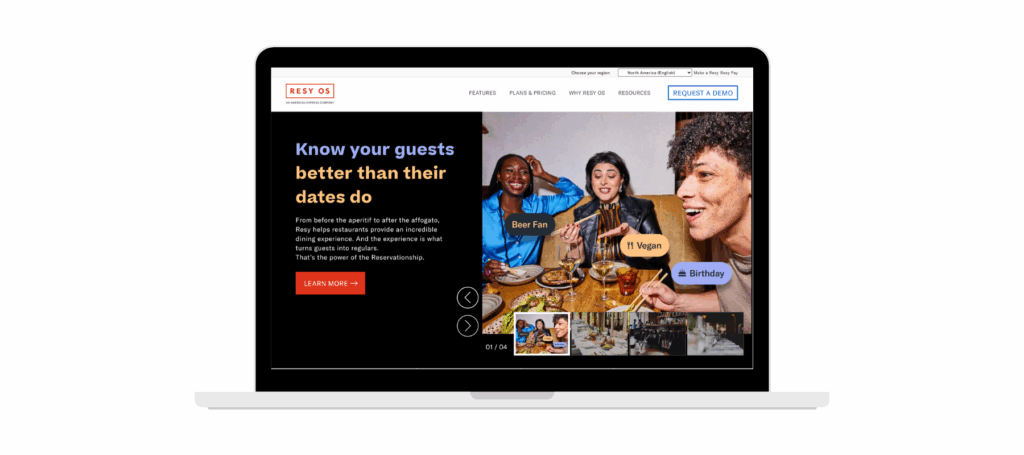
Resy is often seen as “the cool kid on the block” with great branding and popularity in large metropolitan areas. There are no network or cover fees associated with this reservations tool, but the flat rate is still on the higher end of options — especially if you want the full value of the platform with the Platform 360 plan.
Pros:
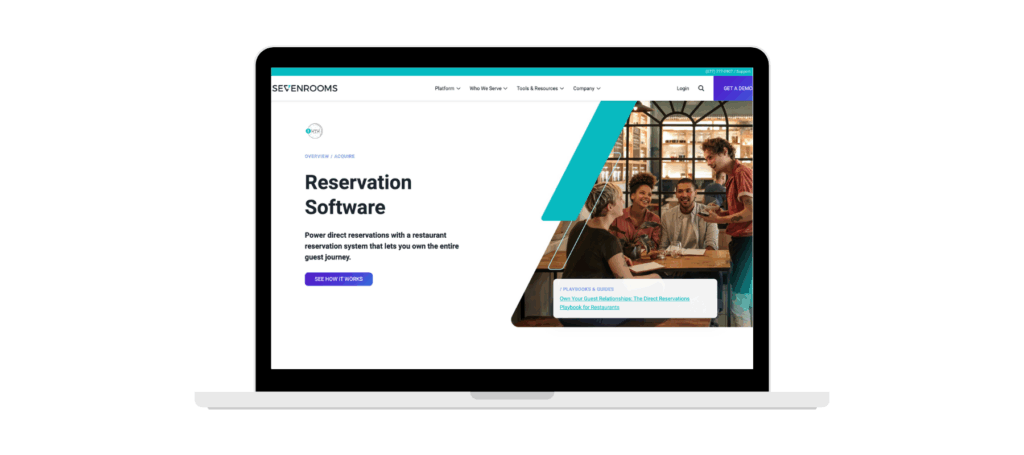
- Offers direct reservations with commission-free covers.
- Reservations are synced to a robust CRM that can show you quick stats on a diner like number of visits, number of takeout orders, and total spend with the restaurant.
- Integrates with 20+ POS systems.
Cons:
- Doesn’t list pricing publicly.
- The platform has extensive features that work well for larger establishments with more complex systems but can result in a steeper learning curve for single location restaurants.
Costs:
Pricing is custom
How SevenRooms is Different:
SevenRooms is a popular pick among hotel food & beverage, big hospitality groups, and restaurants with multiple locations (especially internationally). Data ownership stays with the restaurant instead of the technology company, so it’s easy to see guest data across many properties.
Related Posts
Full Service Restaurants (FSR)
5 ways to boost bar business in Dry January and Sober October

Clover Gift Cards are going digital
Popular Topics
Stay in touch
Sign up and learn more about Clover.
More posts about starting a small business




eBook