
So, you want to start a business. You’ve got products to sell, you’ve done market research, and you’ve got a catchy name picked out. Maybe you’ve even sketched out a rough logo on a napkin while daydreaming about the world-conquering enterprise this business is about to be. Things are getting exciting! And things are getting real.
There are literally hundreds of decisions that retail business owners have to make between idea and execution — and one of the most fundamental ones is what retail format you’ll be operating. Choosing a retail format has massive long and short-term implications on what your business will look like, and how it will run. A brick-and-mortar location on Main Street is a dream, but can be expensive. An online-only experience is streamlined for a business owner and convenient for customers, but difficult to market.
There are pros and cons to every type of retail format. Here’s a breakdown of the most common options to help set you up for long-term success.
Brick-and-mortar
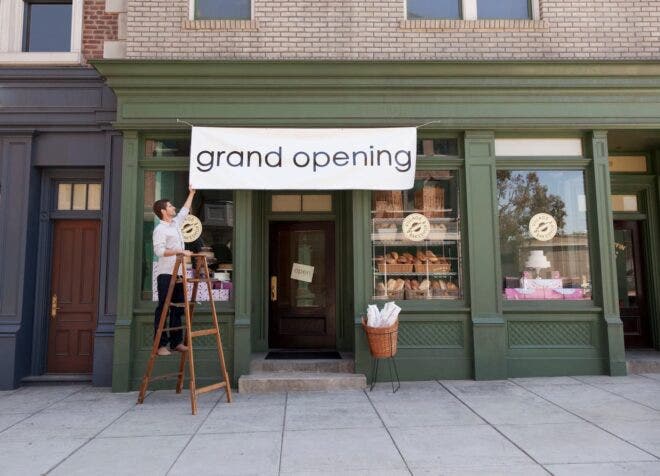
What it is: A brick-and-mortar store is a physical location where customers can come in to browse and shop. It’s what most people dream of when they start a business — after all, who doesn’t want to be the friendly purveyor of a beloved local shop?
PROS:
- You can make it your own. Opening a physical store means you have every opportunity to stamp a real identity onto your business. From decoration, to layout, to customer interactions — a brick-and-mortar location is something that can be truly yours.
- People who visit are more likely to be in a purchasing mood. If someone is perusing a local shop, they’re probably at least a little interested in buying something. Getting people in the door is half the battle, so once they’re in there, there’s less of a barrier to converting them into a paying customer.
- You get to know the community. Building a business is as much about building relationships as it is about moving products. Having a brick-and-mortar storefront is easily the best way to interface regularly with your customer base and build long term relationships that can help your business form a deep connection with the community.
CONS:
- It comes with high overheard, and high risk. Opening a physical storefront is an expensive endeavor. There are licensing fees, down payments, construction, remodeling, decorating — and that’s all before you start regularly paying rent.
- It limits your customer base. The potential customer base of a brick-and-mortar storefront is limited to the area it operates in. If you’re in a small community, or your storefront is in a location without a lot of foot traffic, that could affect your income greatly, and should be taken into serious consideration. Of course, with Clover, you can easily start running an online componentto your store and access customers all over the world.
Best for: Retail businesses with a long-term business plan, solid market research, consistent revenue, and secure funding.
Online marketplace
What it is: An online marketplace is a store that operates entirely online, through a dedicated website or a third-party seller like Etsy. Online marketplaces are everywhere. Because they have the lowest barrier to entry, it can be a great option for your business to start small. However, in an online world, you’ll have to be competitive and nimble in some unique and important ways.
PROS:
- It’s an easy entry point with minimal overhead. If you have an internet connection, some stuff to sell, and enough time, you can run an online store. No physical location means no rent, no opening and closing hours, and virtually no limits to your operation.
- Customers are anywhere and everywhere. It’s the internet, after all. Running an online business opens up your customer base to virtually anyone on the planet with an internet connection — wherever you’re willing to ship your products.
- It’s the leanest version of your operation. An online business won’t require as much support staff as a brick-and-mortar location might. You can even run the whole thing by yourself. If your business is brand new, running it online is a great way to start.
CONS:
- Marketing can be difficult. No foot traffic, no word of mouth around town, no eye-catching storefront on Main Street. That means that all your advertising and marketing will have to take place online, or at physical marketplaces like street fairs.
- You’ll have fewer meaningful connections with customers. Overall, running a business online will minimize the connections you get to make with customers. People who shop online usually want a quick in-and-out experience. Maybe you can convince them to fill out a customer satisfaction survey, but overall, you won’t be getting to know your customers in the same way you would with, say, a brick-and-mortar location.
- Pricing can become a whole new animal. Your customers are already online, so they can easily open a tab and compare your prices with those of Amazon or another large retail outfit. You’re probably offering better and more unique products, but your prices will have to be competitive in an online world.
Best for: Businesses that appeal directly to specific markets, or business owners who want to start small with low overhead and build from there.
Pop-up shop
What it is: A pop-up shop is when a store (often an online store) temporarily operates out of a physical location. For any marketplace, a pop-up can be a great way to attract or intrigue a new customer base.
PROS:
- You can create a memorable brand experience. Pop-ups are usually built to be as exciting and intriguing as possible. They’re hyped up on social media, whispered about around town, and some are even roped off — adding an air of exclusivity. For any business, the “cool factor” of a trendy pop- up can pay off in dividends.
- It offers deep interaction with customers. People who walk into a pop-up are usually very curious about what’s going on, who you are, and what you’re selling. That means you have every opportunity to not just make a sale, but make one of those magical deep connections that will get people talking about your business to their friends and family.
CONS:
- They can be difficult to get right. Location is everything for a pop-up. You want a location that can be easily found and stumbled-upon. And even if you find that magical spot, securing temporary retail space can be logistically difficult and come with a lot of upfront cost.
- It can be limiting and risky. Your pop-up will, naturally, be limited to that one location, for that one period of time. So, you absolutely have to make the most of it. If it ends up pouring rain the entire time and no one walks into the store, that could potentially be a big waste of time and money.
Best for: Established businesses who want to test out new markets, or online businesses looking to explore their potentialfor brick and mortar expansion.
Seasonal
What it is: A seasonal business is one that operates for only part of the year, such as a Halloween costume store or a floral nursery. This format can offer some really interesting benefits for business owners, but can also be challenging to build and maintain.
PROS:
- Down time means thinking time. Your time between operating seasons can be spent improving the business, innovating, doing more research, or even just catching up on your books.
- You can make meaningful connections with seasonal customers and employees. Coming back to a business year after year can be a very special thing for both your customers and your employees. Absence makes the heart grow fonder, and the most successful businesses are the ones that provide some sense of comfort or familiarity when they open their doors again. It can be a tricky thing to build, but if you do it, the payoff in terms of brand loyalty can be immense.
- You’ll have a little more freedom. Freedom to do whatever you want when you’re not running the business. You can use some of that downtime to improve the business, but you can also use some of that downtime as downtime. Don’t forget: taking some time away to clear your head will actually make you a better business owner.
CONS:
- You’ll have inconsistent income. Operating for only a few months of the year means your business is only generating income for that time. Maybe you’ve figured out a way to make that work, but if not, you might find yourself needing to supplement your income in some way during those times when your business goes dark.
- It can come with greater stress. Think about it, you’re reducing an entire fiscal year for your business down to just a couple months. It can be stressful to make sure things run smoothly, and that you sell enough product to justify the whole equation.
- Staffing can be difficult. You might be okay working seasonally, but you’ll need to hire staff that are okay with it as well. Luckily, there are always teenagers looking for summer jobs, but if your business needs more skilled workers, or isn’t operational during the summer, it can be significantly more challenging.
Best for: Businesses that are naturally seasonal (summer camps, flower nurseries, etc.) or business owners who want more work/life balance than year-round retail.
As you can tell, there are no easy answers. Starting a business is a complex thing and will almost inevitably lead to frustration and stress before it leads to triumph. That said, being educated and making a decision that’s right for you and your business is the best first step. Choosing the store format that’s right for you could make the difference between a calamity and the beginning of a long and fruitful career as an entrepreneur.
To learn how we can help you accept payments and manage your business, contact a Clover Business Consultant today.
This information is provided for informational purposes only and should not be construed as legal, financial, or tax advice. Readers should contact their attorneys, financial advisors, or tax professionals to obtain advice with respect to any particular matter.
Stay in touch
Sign up and learn more about Clover.